
Organometallics by Design
Inorganic tin(IV) catalyst platform.

Aliphatic polyurethane systems have earned their place across demanding markets, but many still depend on legacy catalyst technologies that are increasingly difficult to reconcile with modern EHS and regulatory expectations. TechSynt's catalytic platform is designed to preserve the performance advantages of aliphatic PU chemistry while bringing catalyst systems into closer alignment with today's safety and regulatory realities.

Internal & dental applications, medical devices, implants and equipment where biocompatibility and regulatory clearance are critical.

Interior comfort & safety, exterior structural parts (RIM), under-the-hood components and premium paints requiring precise cure timing and activation control.

Water-resistant fabrics, stretch fibres, footwear soles — driven by EHS compliance and skin-contact safety requirements.

Packaging, sealing and processing equipment where food-contact safety and migration limits define catalyst eligibility.
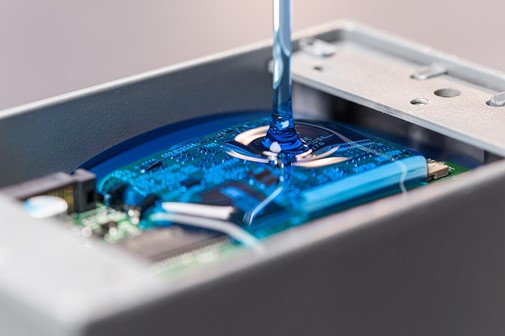
Encapsulation, potting, structural moulded parts benefiting from extended pot life and controlled cure onset.
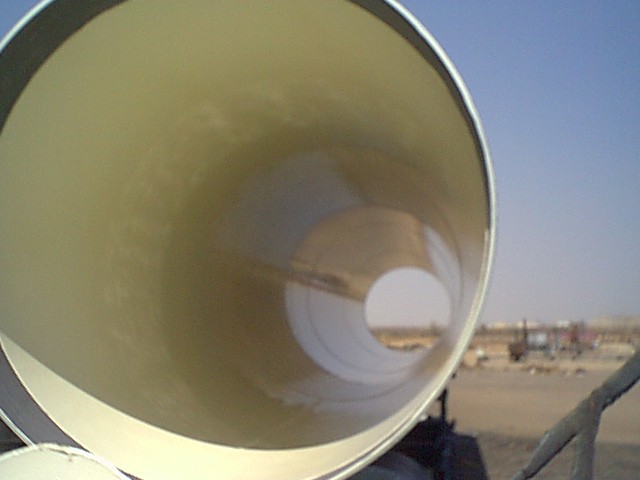
Seals, gaskets and pipe coatings requiring potable-water contact certification — where current catalyst toxicity is disqualifying.
Most PU catalyst classes are limited by toxicity, stability, reactivity, and control. TechSynt addresses these through a ligand-based tin(IV) platform.
| Property | Existing Tin(IV) | TechSynt Tin(IV) |
|---|---|---|
| Inherent activation control | ✗ No activation control | ✓ Activation Control by design |
| Air/moisture stability | ✗ Susceptible | ✓ Ambient air stable |
| Ligand stability | ✗ Alcoholysis risk | ✓ Chelate-stabilised |
| Platform approach | Single types | ✓ 20+ complexes |
| Post-reaction control | ✗ Limited | ✓ Deactivatable |
| Industry affiliation | Incumbent ecosystem | ✓ Independent |
The structural basis of organotin toxicity. Its absence makes TechSynt's complexes negligibly toxic while addressing regulatory demands.
Polydentate chelate ligands provide thermodynamic stability and resistance to air and moisture. Under dry conditions, the complexes can be stored for extended periods.
Our catalysts are highly soluble in glycols, polyether and polyester polyols, as well as common organic solvents, and are compatible with a broad range of polyurethane formulations.
Depending on the formulation, the catalyst may remain partially mobile or become chemically bound through covalent or coordination interactions.
Our catalyst platform already includes more than 20 complexes and demonstrates activation profiles from room temperature to 65°C and 90°C, with systems above 120°C also achievable.
Commercial precursors, standard equipment, and consistent reproducibility make the synthesis well suited for scale-up.
From a set of 21 catalyst variants developed and tested in the laboratory, TechSynt internally identified three functional families: C-1 (latent), C-2 (controlled activation), and C-3 (fast curing).
C-1 remains largely inactive at room temperature, activates moderately at 65°C, and becomes highly efficient at 90°C, allowing formulators to control gelation timing precisely. DBTDL offers no such flexibility.
Rapid onset at ambient temperature. No activation control — gelation begins immediately on mixing. No flexibility for extended processing or complex moulding.
Moderate activation at 65°C. Significant pot life extension versus DBTDL. Predictable onset enables controlled moulding and longer processing windows.
Highly efficient at 90°C. Fast gelation even at low catalyst loadings. Consistent and predictable across the full concentration range.
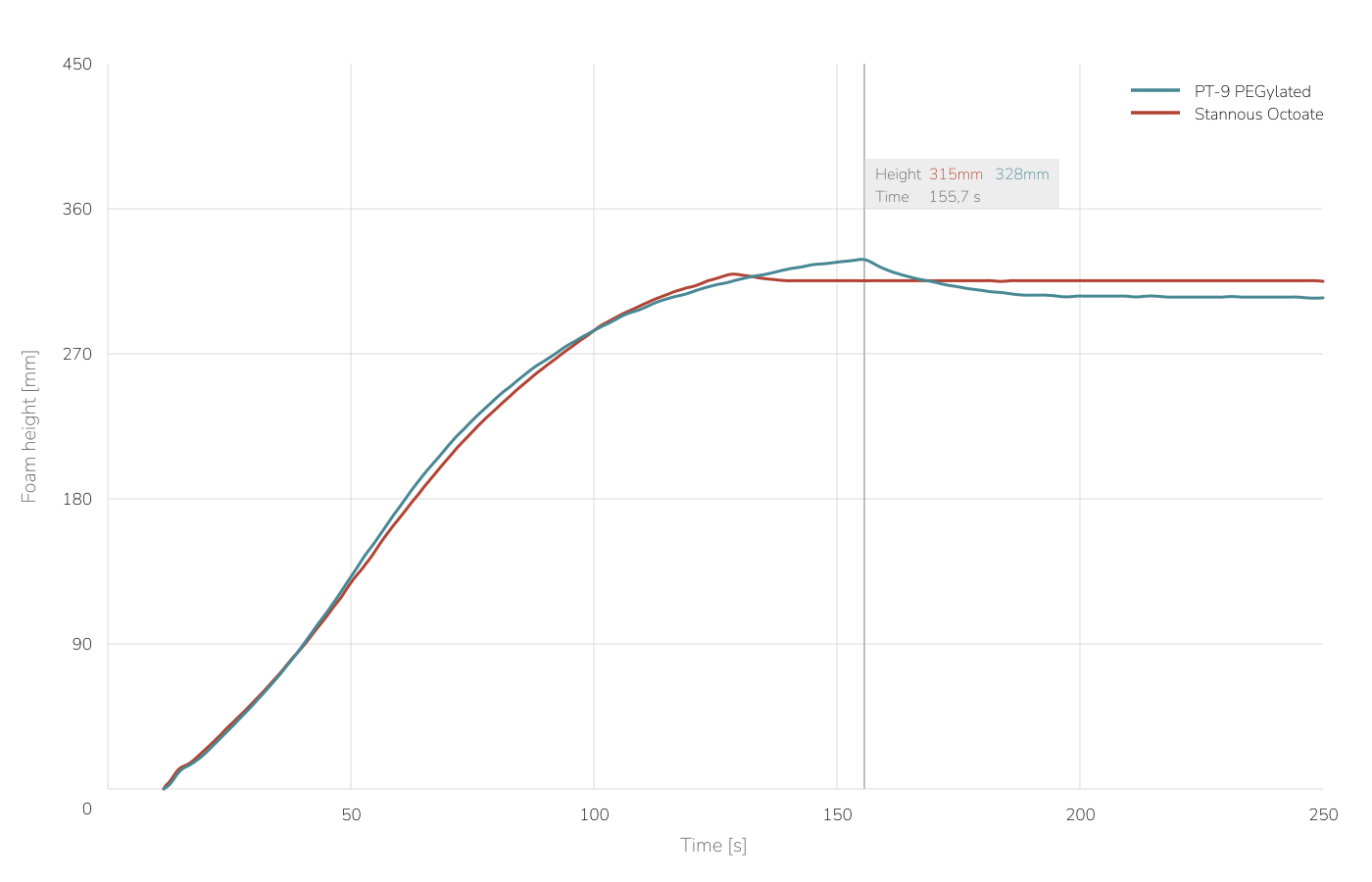
In a room-temperature TDI/polyol foam system, PT-9 PEGylated closely follows the SnOct rise profile. PT-9 continues rising slightly beyond the SnOct plateau, reaches a modestly higher maximum, and then settles lower. Overall, the profiles indicate comparable catalytic behaviour, with room for further formulation fine-tuning.
As part of our R&D process, all TechSynt catalyst compounds undergo computational hazard modelling prior to synthesis scale-up. Results consistently confirm a low-toxicity profile across all major regulatory endpoints — a direct consequence of the absence of Sn–C bonds in our catalyst architecture.
DBTDL represents a legacy catalyst profile with clear regulatory and EHS liabilities. Public hazard classifications (PubChem, ECHA, SDS) are associated with high acute oral toxicity, severe skin and eye damage, reproductive toxicity concerns, and severe chronic aquatic hazard. These classifications reflect the Sn–C bond architecture that TechSynt's chemistry is specifically designed to avoid.
Stannous octoate presents a more mixed hazard profile. While its acute oral LD50 may appear comparatively acceptable, the broader picture reported in public sources includes skin and eye irritation, sensitisation, reproductive toxicity concern, and environmental hazard. Acceptable acute oral toxicity alone does not translate into a clean overall safety profile — the endpoint matrix below illustrates why endpoint-level review matters in catalyst selection.





Our research is led by Prof. Mikhail S. Nechaev, Ph.D., D. Sc., a foremost scientist in the field of organometallic chemistry with over 20 years of experience.
Prof. Nechaev has published over 110 papers on various topics in advanced chemistry, has been cited more than 3,000 times to date (Google Scholar), and has collaborated on dozens of projects with major chemical manufacturers and other industrials and academic institutions.
Accelerate market adoption.
A partnership model designed for joint development and aligned commercialization. We offer our tin(IV)-based catalytic platform as a foundation for further development in collaboration with selected partners.
Instead of starting from first principles, you can build on a proven catalytic system and adapt it to your specific formulations, processes, and applications.
We welcome enquiries from industrial partners, potential licensees, and collaborators across the polyurethane value chain. Whether evaluating a catalyst transition, managing regulatory exposure, or exploring new markets — we are ready.